Running shoe comparison site: we tested Runometry
Found your race on RaceUp? Now find the pair to match: race-based filters, clear spec sheets and retailer prices side by side. Our hands-on test.
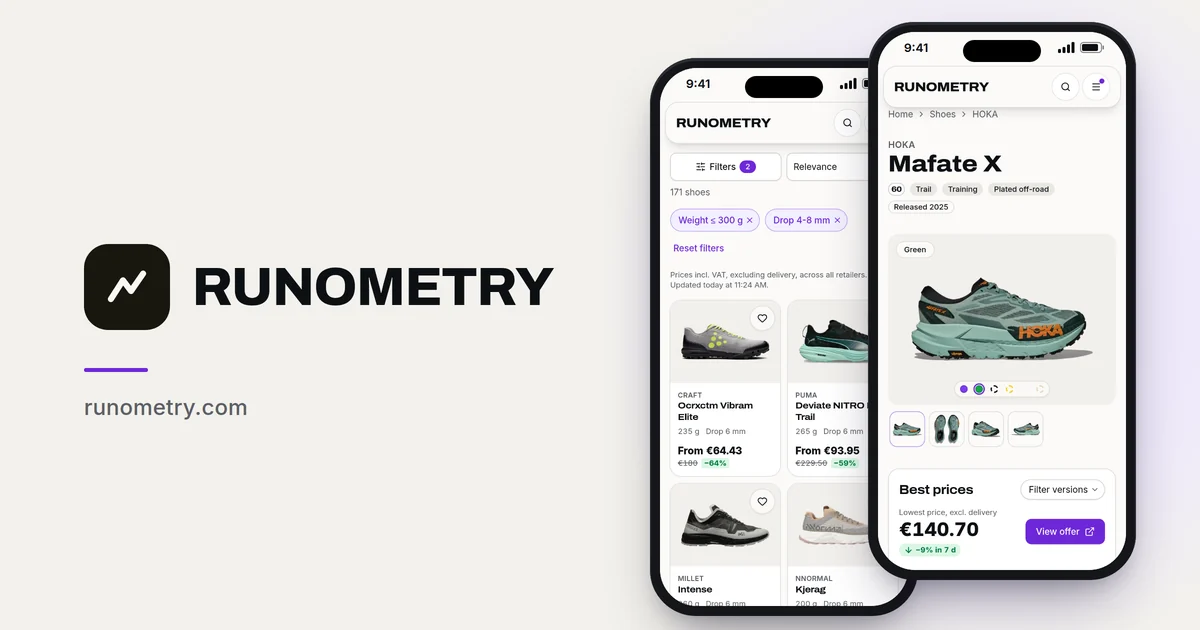
Your bib is booked, the date is circled in red, the training plan is stuck on the fridge. One question is left, and it makes you sweat before the first session: which shoes are you going to run this thing in?
We put Runometry to the test, on our phones, just like you would. It's a free running shoe comparison site: more than 1,200 models from 41 brands, spec sheets in the same format and retailer prices side by side. We liked the idea straight away: you found your race on RaceUp, now find the pair to go with it.
Start from your race, not the shoe wall
A 10K, a marathon and a 40 to 80 km trail don't call for the same pair. Runometry sorts its models by use: Runometry's trail selection gathers shoes built for paths, mud and mountains, and the marathon running shoes the ones that go the distance on tarmac.
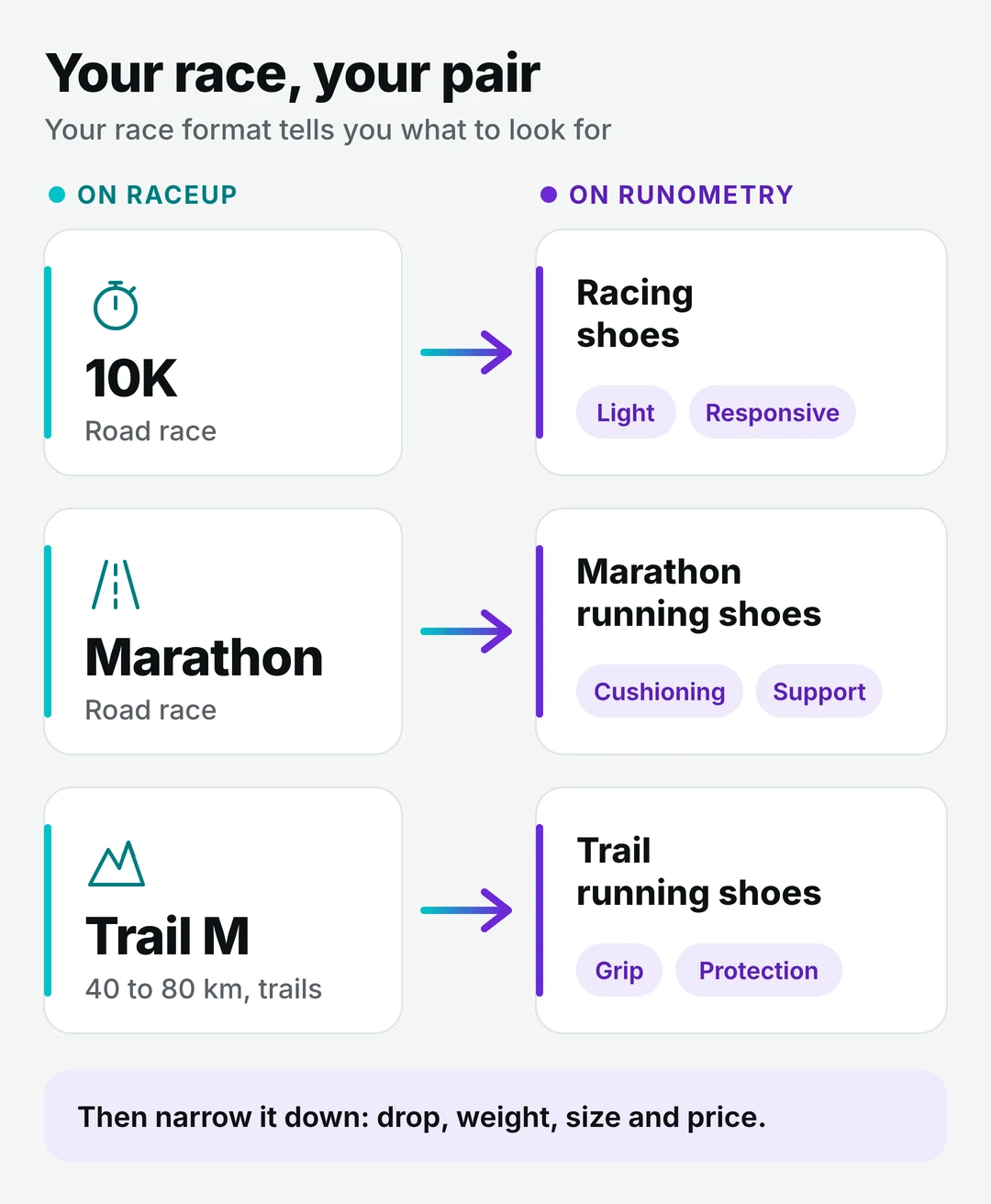 What to look for, race by race. Image: RaceUp
- 10K: lightness and pop, to surge and hold your pace.
- Marathon: cushioning and support, because the last miles are run on legs made of concrete.
- Trail M (40 to 80 km on RaceUp): grip, protection and cushioning to soak up hours of climbing.
Then it's filter time: on mobile, a "Filters" button opens a panel that slides up from the bottom of the screen (who it's for, brand, size, price, weight, drop). For our test: trail, 300 g max, 4 to 8 mm drop. The list shrinks on the spot, and every active filter stays pinned at the top, ready to be removed with one tap.
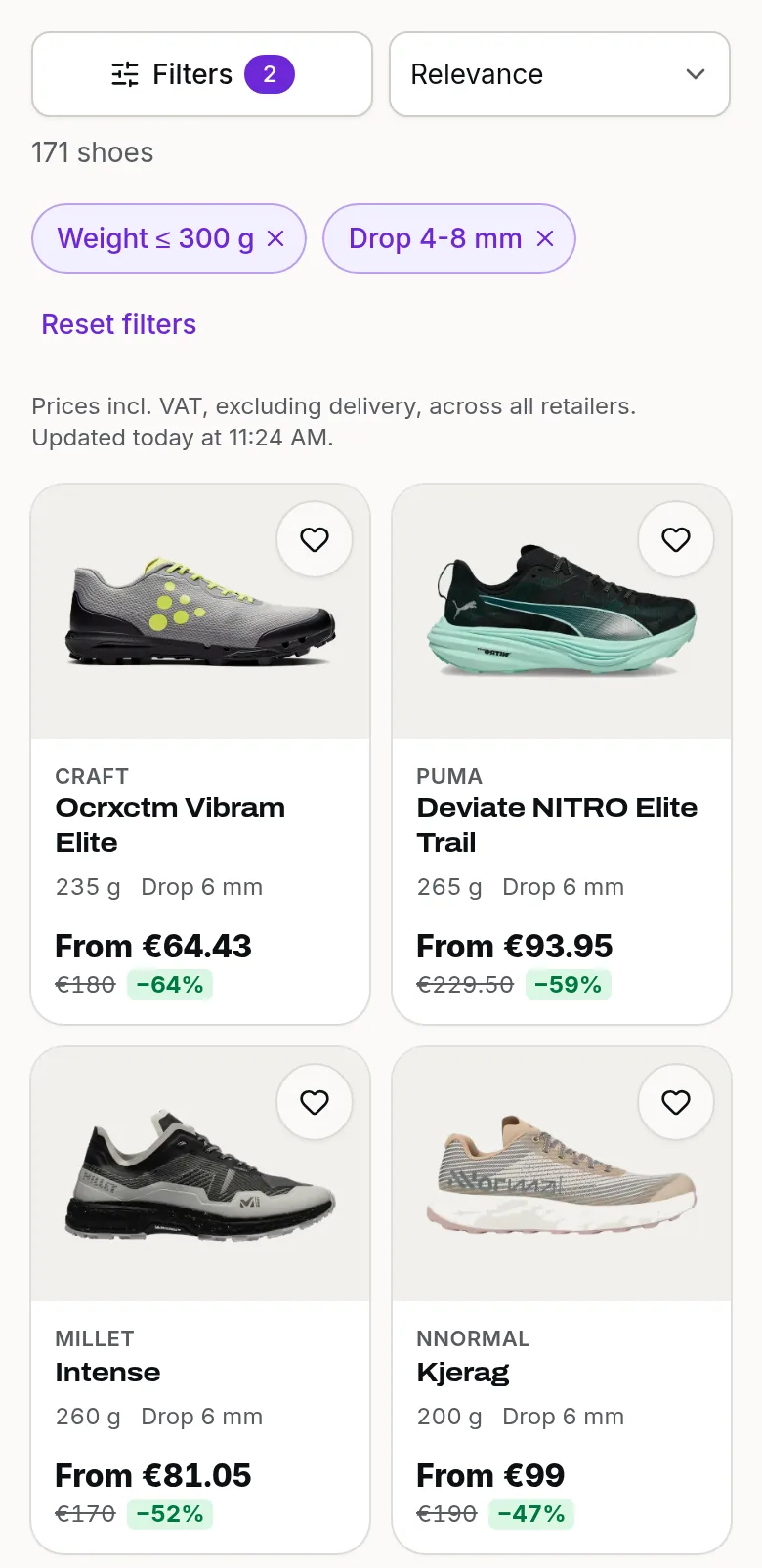 The trail list filtered by weight and drop. Screenshot: RaceUp
No goal yet? Check out the upcoming 40 to 80 km trails or the marathons on the calendar, then come back and filter.
Read a shoe page like a pro
Every page follows the same template, whatever the brand, with published values and their sources at the bottom. Four lines deserve your attention:
- Drop: the height difference between heel and forefoot. A low drop needs a gradual switch if you're used to a high one.
- Cushioning: you read it in the sole thickness (the stack). More foam means more protection over the long haul.
- Weight: given in the source's reference size when it's known. On a long trail, comfort matters more than a few grams.
- Grip: the outsole, plus lug depth when the brand publishes it.
Nice touch: every measurement is placed against models with the same profile. To dig into the criteria race by race, read our article on which running shoes for which type of race.
Ready for your next challenge?
The best place to find your next sports challenge.
- Search by sport, location, date
- Thousands of events
- Register in a few clicks
The Index and the rankings: a solid first cut
Every page also shows the Runometry Index, a score out of 100. No in-house testing or opinions behind it: it's calculated from published facts (weight, sole thickness, foam material), against shoes with the same profile only. For long trail and ultra, cushioning counts for half the score. Every point is explained, and price stays out of the equation.
That's where the rankings by profile come from, podium included. The long trail and ultra ranking is a great starting point to get ready for your 40 to 80 km trail.
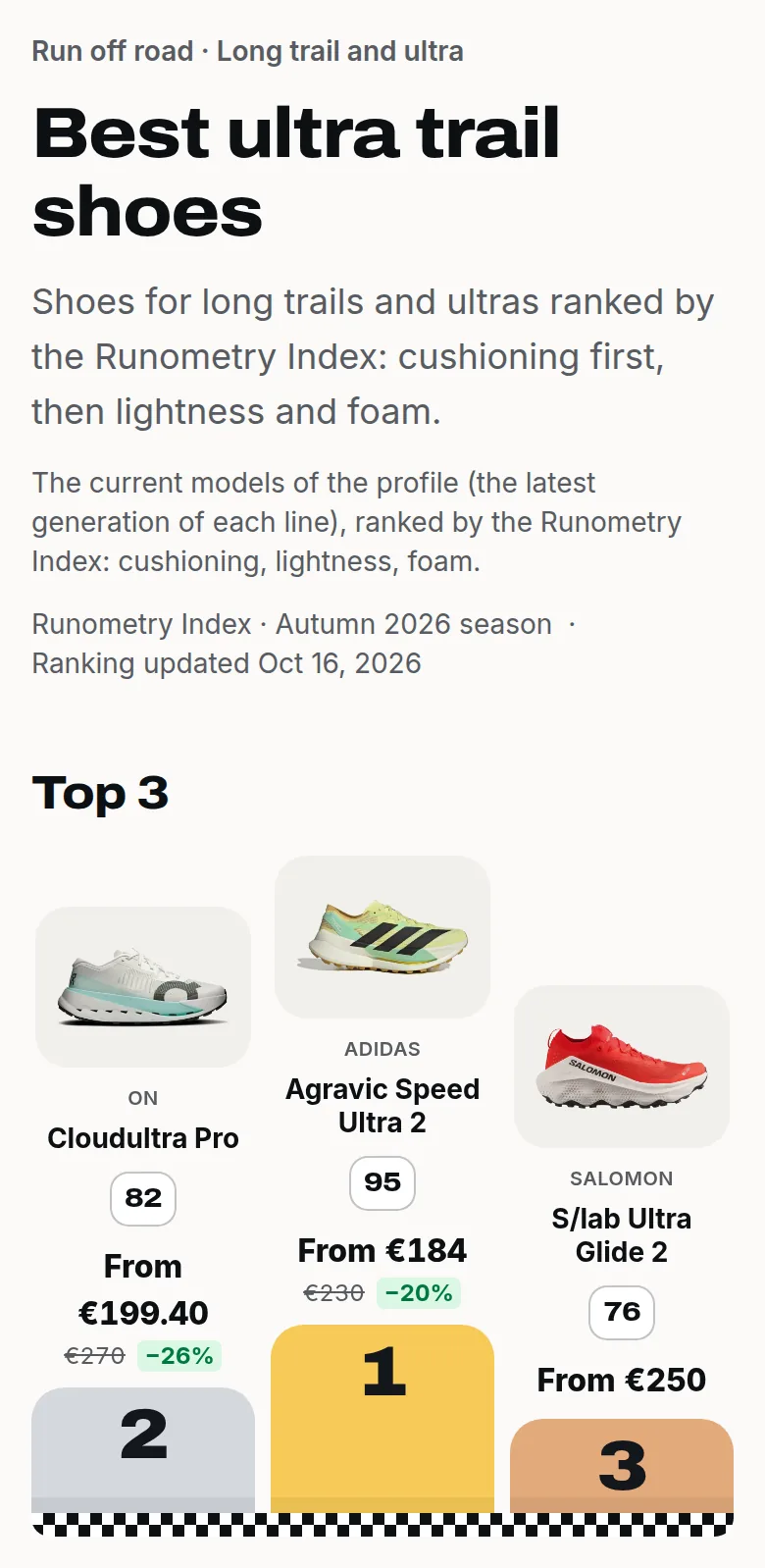 The long trail and ultra podium. Screenshot: RaceUp
Our take, no sugar-coating: the approach is objective and transparent, but still light on criteria. On a 40 to 80 km trail, grip, protection, support and durability matter as much as cushioning, and the index doesn't measure them. The site is young and the index is recalculated every season, so we expect it to grow. In the meantime, use it to trim your shortlist, then read the shoe page and, above all, try the pair on.
Pay the right price without losing your evening
Same model, same size, and yet price gaps that hurt more than a final climb. The "Best prices" block lists retailers from cheapest to most expensive, shipping excluded by default, with sizes in stock and delivery times. On the HOKA Mafate X page, on the day we tested, the gap between the first and last line easily covered a pair of technical socks.
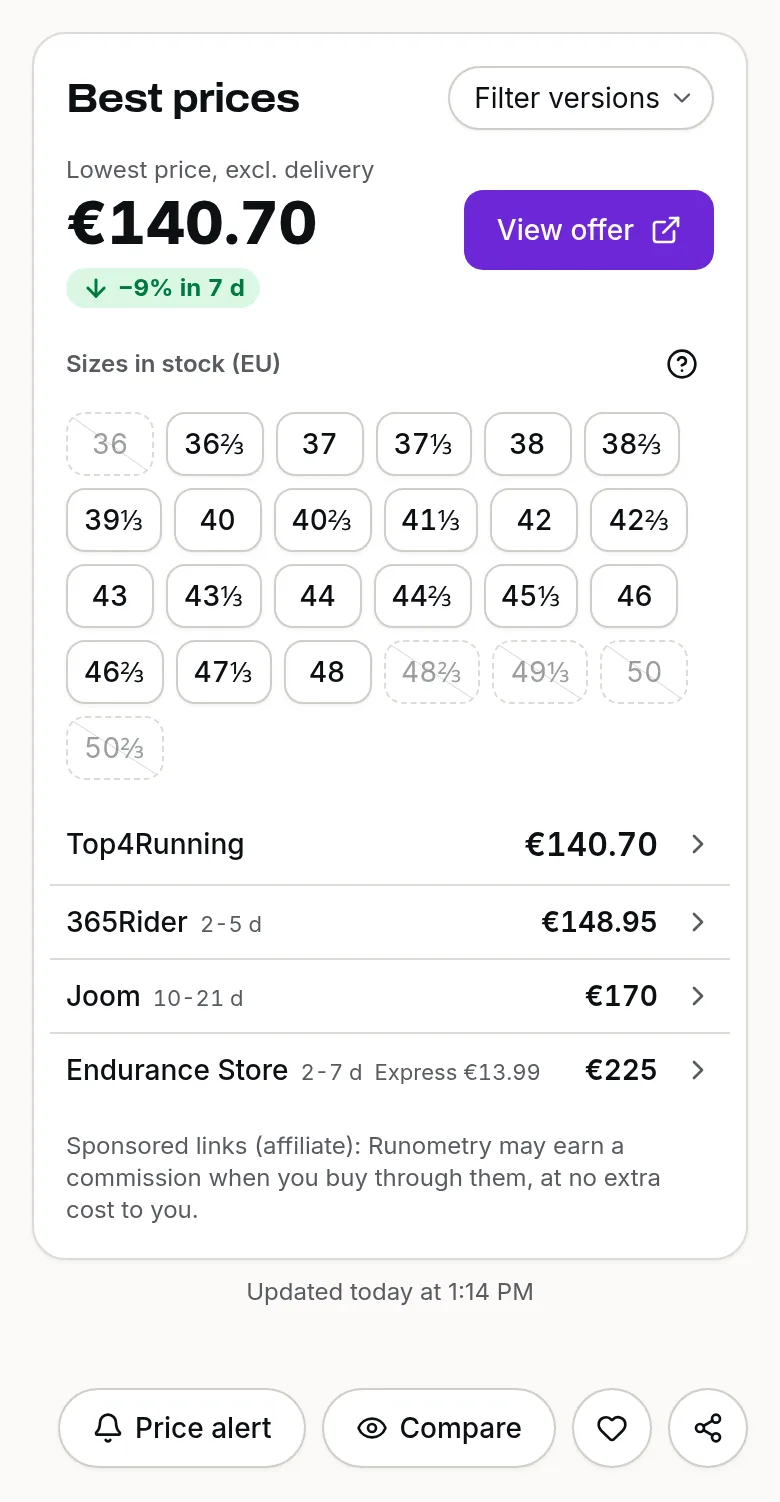 The price comparison on a shoe page. Screenshot: RaceUp
- Your size first: sizes sold out everywhere are crossed out, so no nasty surprise at checkout.
- Shipping, if you want it: your shopping preferences show prices with estimated shipping to your country included.
- Real deals: the running shoe deals page measures discounts against the usual price or the list price, never against a retailer's crossed-out price.
- The right moment: a badge flags prices on the move, and a price history chart shows up after 15 days of tracking.
When to buy? Set a price alert as soon as you sign up for your race: you get an email when the pair drops below your target price, and the "Stock alert" tells you when your size is back. Free, no account needed. Just leave yourself some margin: race shoes get broken in during training, never on race day.
On transparency, it's clear-cut: retailer links are flagged as sponsored links (affiliate), at no extra cost to you.
Why it earns a spot in our race bag
- Free, no account: you browse, you compare, you go running.
- Built for your phone: sliding filter panel, two-column grid, big buttons, even with frozen fingers at the start of a winter trail.
- One race, one pair: the logic matches RaceUp's. You pick your next challenge, Runometry helps you pick the gear.
In short: find your next bib on RaceUp, then your next pair on Runometry. And if you spot a great deal, grab it before it runs away.
One last confession: Runometry is built by the creator of RaceUp. Same love of the stopwatch, different start line.
Cover image: Runometry (press kit). Screenshots and diagram: RaceUp.
Ready for your next challenge?
The best place to find your next sports challenge.
- Search by sport, location, date
- Thousands of events
- Register in a few clicks